A complete guide for brands, teams & OEM buyers
Introduction
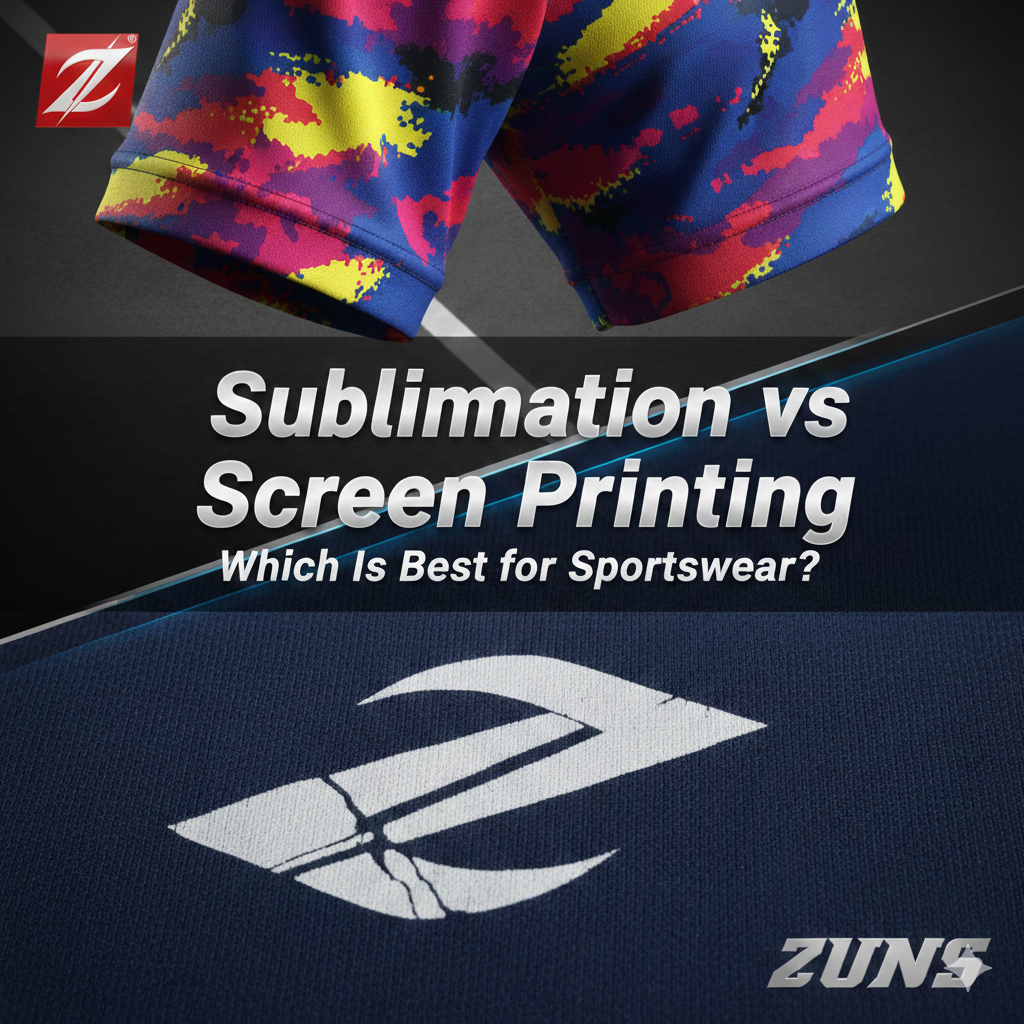
Choosing the right printing method is one of the most important decisions when manufacturing custom sportswear. Two of the most popular techniques are sublimation printing and screen printing — each with advantages, limitations, and ideal use cases.
In this guide, we break down both methods so you can choose the best option for your sportswear order — whether you’re designing team uniforms, training wear, or performance apparel.
🔍 What Are Sublimation and Screen Printing?
Sublimation Printing
Sublimation printing uses heat to turn special sublimation ink into a gas, which then permanently bonds with the polyester fibers of the fabric. This results in vibrant, detailed prints that become part of the garment itself.
Screen Printing
Screen printing presses ink through a mesh screen onto the fabric using stencils for each color. The ink sits on top of the fabric, making it ideal for bold graphics and simple designs — but requiring separate screens for each color.
🛡️ Durability & Performance
Sublimation Advantages
- Long-lasting colors that won’t peel, fade, or crack. The ink becomes part of the fiber, so print durability is extremely high.
- Soft feel with no added texture, keeping garments breathable and comfortable — ideal for athletic wear that needs moisture management.
- Full-coverage printing is possible, including gradients and photo-quality artwork without added per-color cost.
- Less waste than traditional processes, making it a more eco-friendly choice.
Screen Printing Advantages
- Bold, opaque colors on a wider variety of fabrics including cotton and blends.
- Often more durable on dark fabrics, especially when using high-quality inks and proper curing.
- Often more durable on dark fabrics, especially when using high-quality inks and proper curing.
🎨 Design Flexibility
Sublimation
- Unlimited colors, gradients, and intricate patterns — perfect for full-custom team uniforms or performance apparel.
- Works best on polyester or high-polyester blends, which is common in modern athletic wear.
- Not ideal for dark base colors because sublimation dyes are transparent and show best on light backgrounds.
Screen Printing
- Best for solid graphics and logos with limited colors.
- Allows specialty effects like metallic, puff, or glow inks — options sublimation cannot provide.
- Can be used on a wider range of fabrics beyond polyester.
💰 Cost & Quantity Considerations
Sublimation
- Has low setup costs, making it competitive for small to medium orders.
- Cost per piece remains stable regardless of the number of colors or design complexity.
- Requires polyester fabrics, which may slightly increase material cost over basic cotton.
Screen Printing
- Higher initial setup cost (one screen per color), but becomes more economical with very large orders
- Best suited for designs with few solid colors and simple artwork.
🏃♂️ Ideal Use Cases
When to Choose Sublimation
✔ Custom jerseys with full-coverage graphics
✔ Complex designs with gradients or photographic elements
✔ Performance gear where breathability and comfort matter
✔ Orders with variable player names and numbers
✔ Smaller to medium batch sizes
This makes sublimation especially popular among buyers seeking high-performance athletic wear and professional team uniforms. Learn more about how ZUNS handles printing in our Printing & Customization page.
When to Choose Screen Printing
✔ Bold logos and simple artwork
✔ Orders on cotton, blends, or dark fabrics
✔ Very large quantities where cost per unit matters
✔ Effects like metallic ink or puff prints
Screen printing remains a classic choice for bulk runs or simple branding needs, particularly when polyester is not the primary material.
📊 Quick Comparison Table
| Feature | Sublimation | Screen Printing |
| Best Fabric | Polyester | Any (cotton, blends) |
| Color Limit | Unlimited | Limited by screens |
| Detail | Excellent | Moderate |
| Setup Cost | Low | Higher |
| Bulk Order Cost | Stable | Cheaper at scale |
| Feel on Fabric | Smooth | Can be textured |
| Dark Fabrics | Challenging | Excellent |
🧵 Fabric Compatibility Reminder
Since sublimation works best on polyester, you may also want to visit our Fabrics & Materials page to see how different fabrics interact with printing techniques.
🛠 Printing Options at ZUNS Industries
At ZUNS, we offer 3,000+ sublimation and DTF/DTG print colors, along with 100+ colors in embroidery options (regular, chenille, and tackle). This flexibility means you can choose the method that best suits your brand and budget.
If you’re unsure which method suits your project, our team can help — simply request a quote or contact us.
❓ Frequently Asked Questions
Is sublimation better for sportswear than screen printing?
Sublimation is often preferred for performance fabrics (like polyester) because it embeds the design into the fiber, ensuring wash-fast durability and comfort.
Can screen printing fade over time?
Screen printing can fade, crack, or peel over many washes because the ink sits on top of the fabric, especially if low-quality inks or poor curing are used.
Does sublimation work on dark fabrics?
It can be challenging, as sublimation inks are transparent and perform best on light backgrounds.
🏁 Final Verdict
There’s no one-size-fits-all answer — both techniques have powerful use cases.
👉 Choose sublimation for vibrant, all-over prints on polyester sportswear, especially for performance or team uniforms.
👉 Choose screen printing for bold, simple artwork, especially on cotton, dark materials, or large-scale productions.
At ZUNS Industries, we support both methods (plus embroidery and DTF/DTG) to help you get exactly the look, feel, and performance you want for your custom sportswear — with professional guidance and worldwide OEM support.